We are pleased to hear that Yasmine received this award for her outstanding contributions and dedication to entomology at the University of Maryland. The award is recognized with a plaque, waiver of meeting registration, and $1500 to cover costs to travel to Phoenix for the National ESA meeting in November. In Phoenix, she will present on her honors thesis research in our lab entitled, "Does Host Plant Resistance Inadvertently Increase Secondary Pest Populations by Reducing Biocontrol?" Congratulations on your achievements, Yas!
|
We were pleased to hear that Yasmine (Yaz among friends), who has been associated with our lab since spring, 2023, has been awarded the $1,000 Ernest N. Cory Undergraduate Scholarship for Fall 2024. She has had a number of excellent academic achievements at the University and within our department, and especially has contributed to the well-being of the Lamp Lab through Helen Craig's Sustainability/Insect Biodiversity Project and our DNA barcoding educational module. Her current honors thesis research is conducted in growth chambers and field sites on the response of a parasitoid of pea aphids to a glandular-haired alfalfa cultivar. Congratulations, Yaz, on your accomplishments, and we look forward to more in the future!
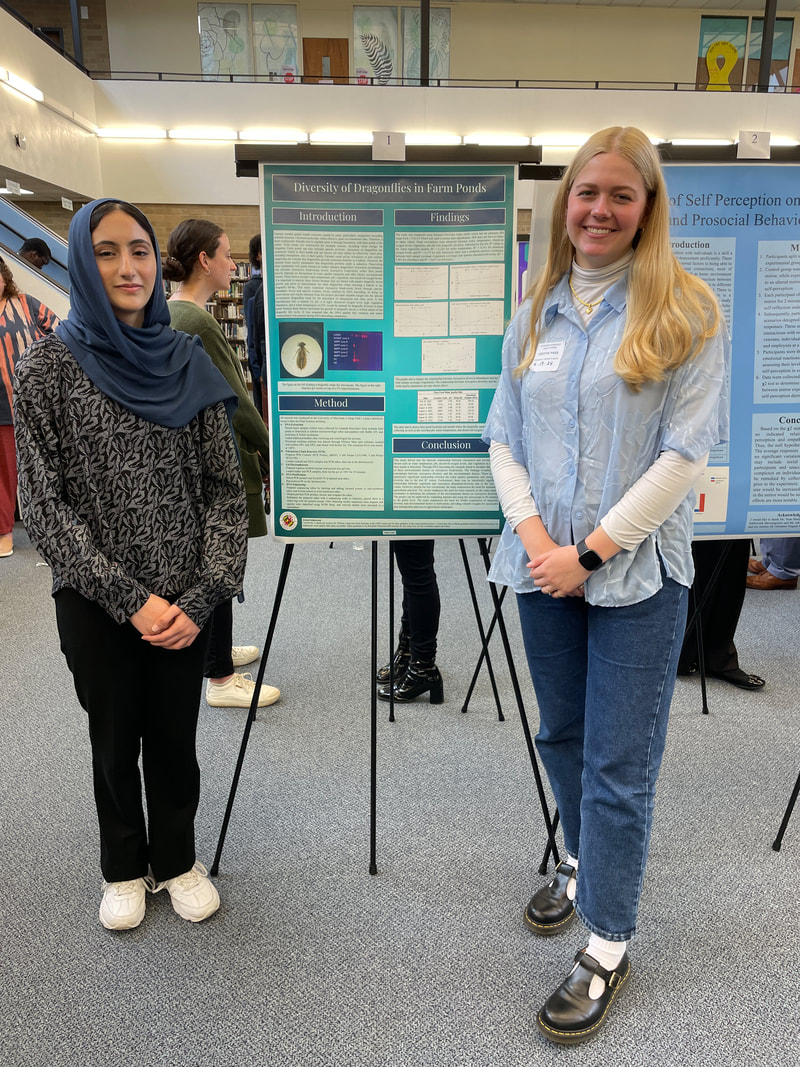
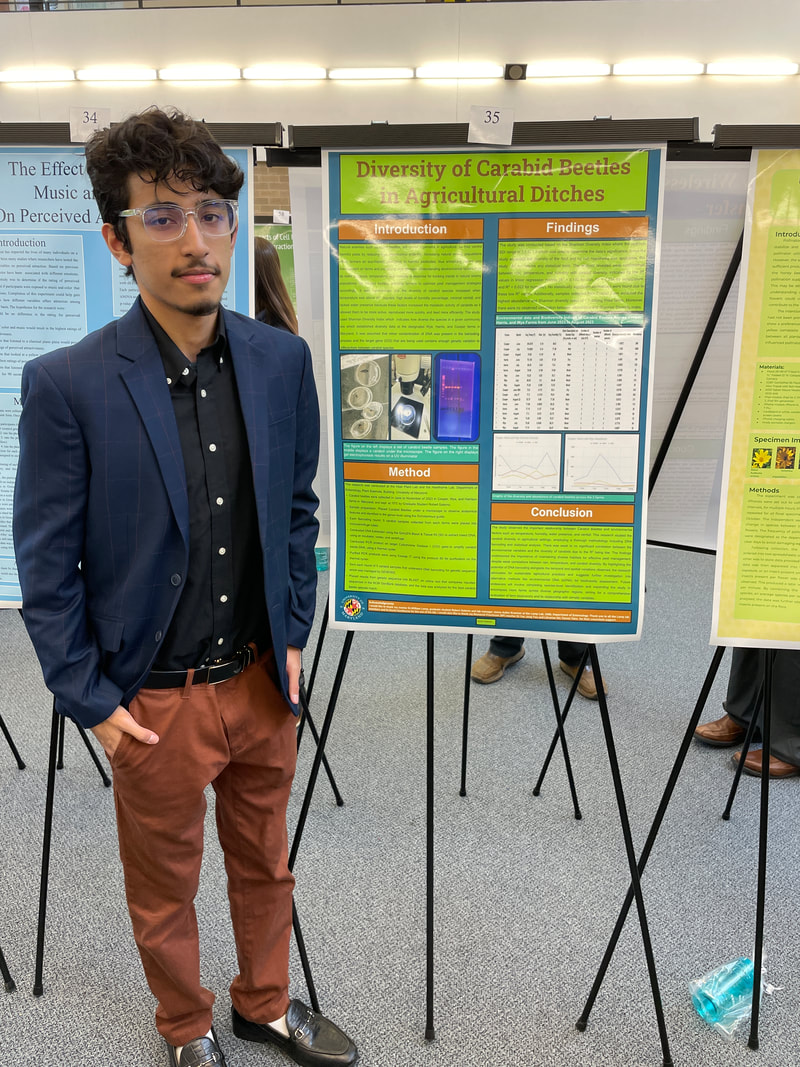
The high school interns Aimal Abid (top left) and Ayat Hasan (top right) presented their posters at the annual Research Practicum Symposium at Eleanor Roosevelt High School. Aimal's poster was titled "Diversity of Dragonflies in Farm Ponds" and Ayat's was "Diversity of Carabid Beetles in Agricultural Ditches". The Lamp Lab is extremely proud of all the hard work they have put in this year and wish them luck at Johns Hopkins University!
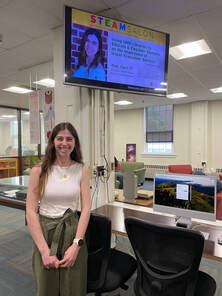
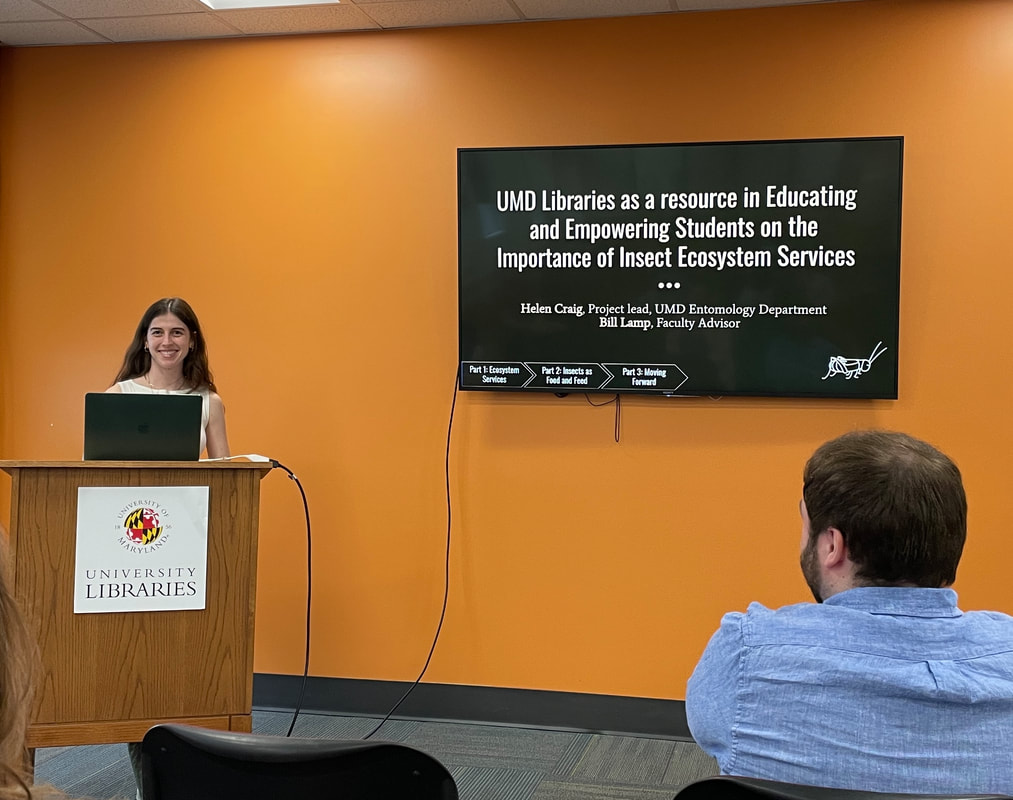
Helen Craig did an amazing job presenting her previous sustainability grant project and ongoing Healthy Food Systems mini grant project! She talked about "Using UMD Libraries to Educate and Empower Students on the Importance of Insect Ecosystem Services". Great job Helen!
Amanda Brucchieri and Robert Salerno are finalists in the 3 Minute Thesis Competition! For more information see here. They won the first-round competition and won a college-level prize and advanced to the final round 3MT competition! Congrats!
We are pleased to announce that Margaret (Maggie) Hartman passed her Masters defense yesterday. Her thesis is titled, "ODONATA SPECIES COMPOSITION IN AGROECOSYSTEMS: PRELIMINARY SURVEYS WITH AN EMPHASIS ON POTENTIAL FOR BIOLOGICAL CONTROL ON FARMS". Congratulations, Maggie!
Exciting Internship Opportunity: Join Resilience CAP (RCAP) for Sustainable Agriculture Research!3/4/2024
In collaboration with universities nationwide, RCAP offers student interns hands-on experience in sustainable agriculture. Based at the University of Maryland, interns engage in research projects exploring plant diversity, crop perenniality, and economic circularity. Led by Dr. Bill Lamp, the internship focuses on beneficial arthropod biodiversity within agricultural settings. Apply by March 29, 2024, for this exciting opportunity! See below for more information. 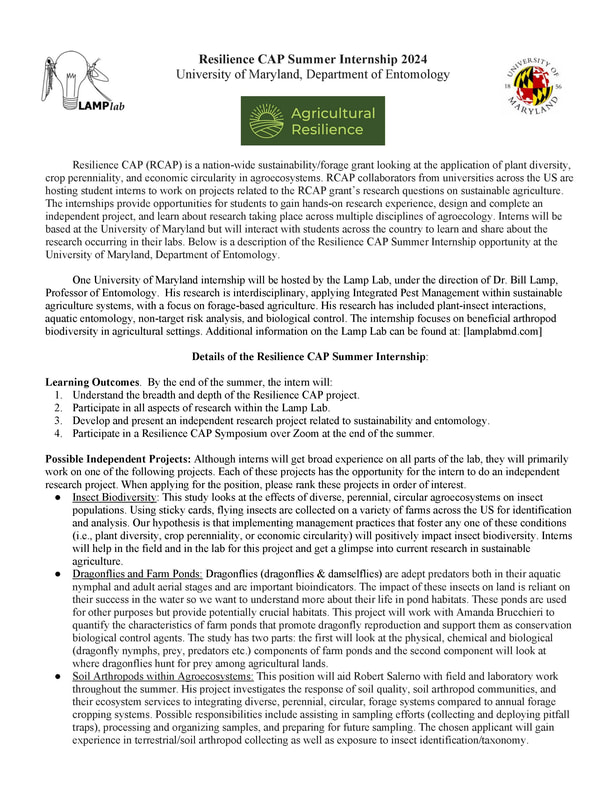 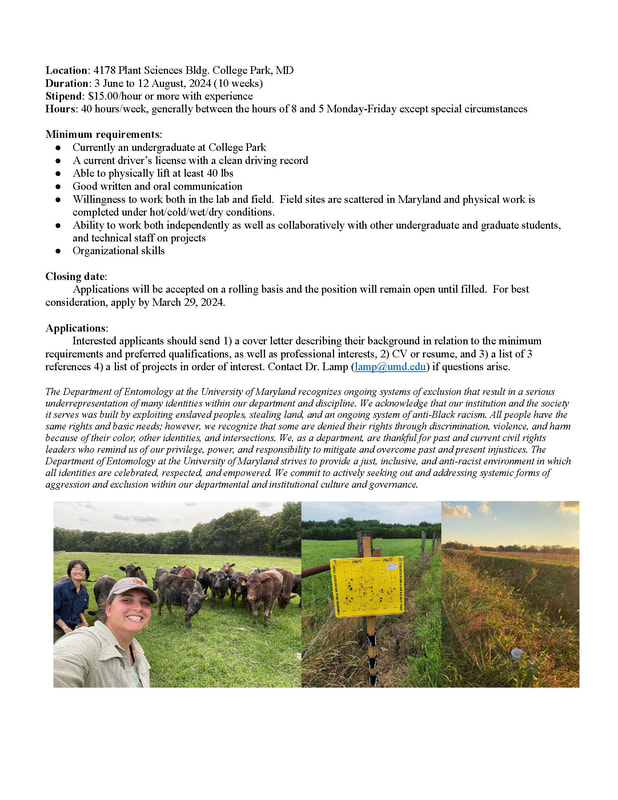 Funded by the University of Maryland Sustainability Fund, Helen’s team (Felicia Schectman, Yasmine Helbling, Fiona Torok, and Jenna Kraemer) produced insect collections organizes by ecosystem services, as well as posters explaining the value of insects in their performance of ecosystem services like pollination, pest control, and decomposition. These materials are now on display at three locations on campus, including (the STEM library, 4th floor of McKeldin Library, and 1st floor of the Plant Sciences building). We are pleased that students, staff, and faculty can visit these displays and learn about the importance and value of insects. More about this project can be accessed here. 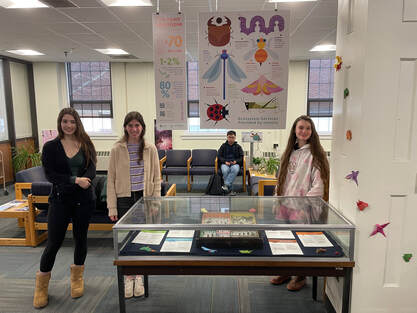 Fiona Torok, Helen Craig, and Yasmine Helbling (left to right) and the insect biodiversity display in the STEM library at UMD. 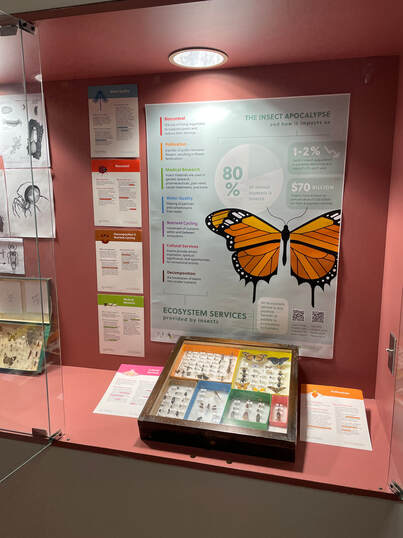 The insect biodiversity display (above) on the first floor of the Plant Sciences Building. 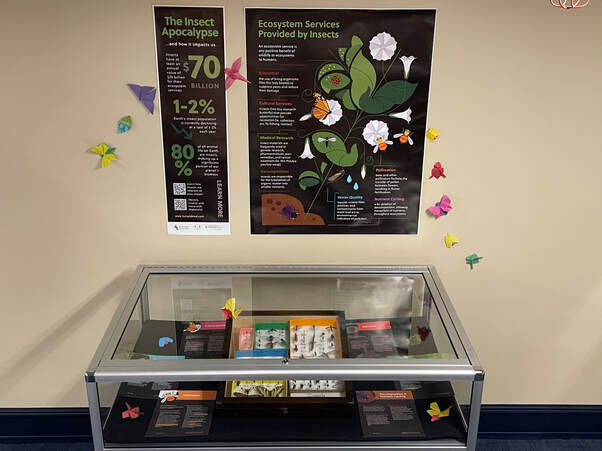 The insect biodiversity display (above) on the fourth floor of McKeldin Library at UMD.
We are pleased that Ali passed his defense with flying colors. He is still editing his thesis, entitled "Enhancing biological control by ground beetles (Coleoptera: Carabidae) through agricultural drainage ditch management practices," and expects to complete graduation requirements in January for Spring graduation. Congratulations, Ali!
Ali Shokoohi got third place for the poster session on "Advancing Agricultural Production Systems hosted by the College of Agriculture and Natural Resources, University of Maryland. The poster was based on his thesis work on conservation biological control by ground beetles through management of agricultural drainage ditches. The work was supported by a USDA SARE grant to our lab. Congratulations, Ali!
|
 RSS Feed
